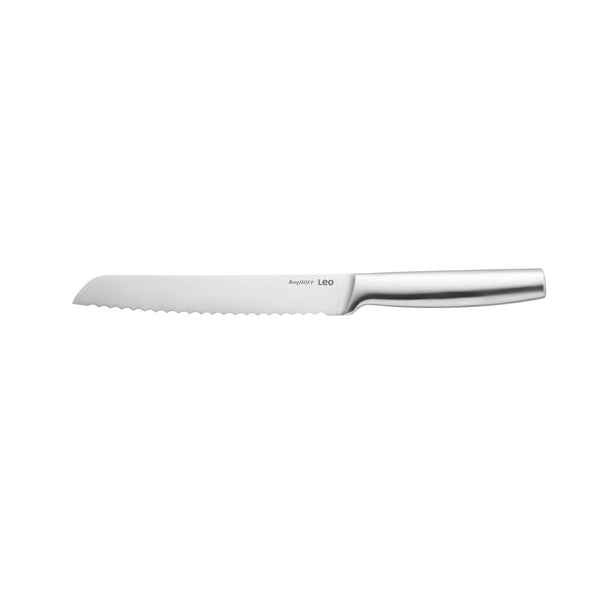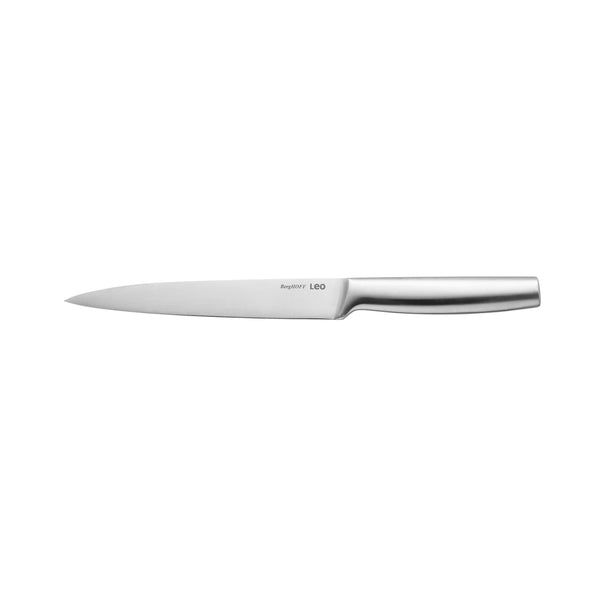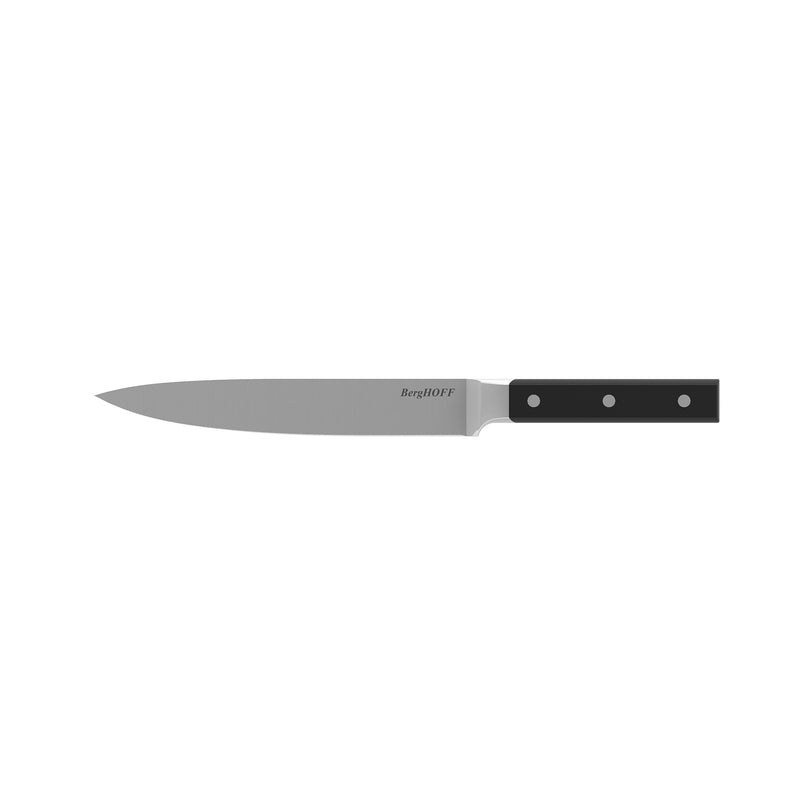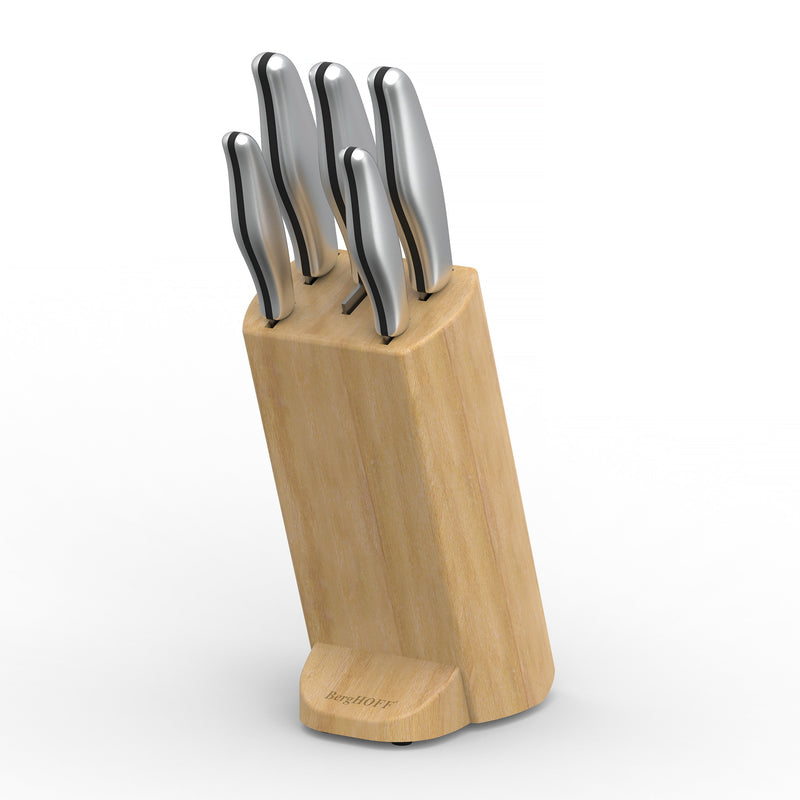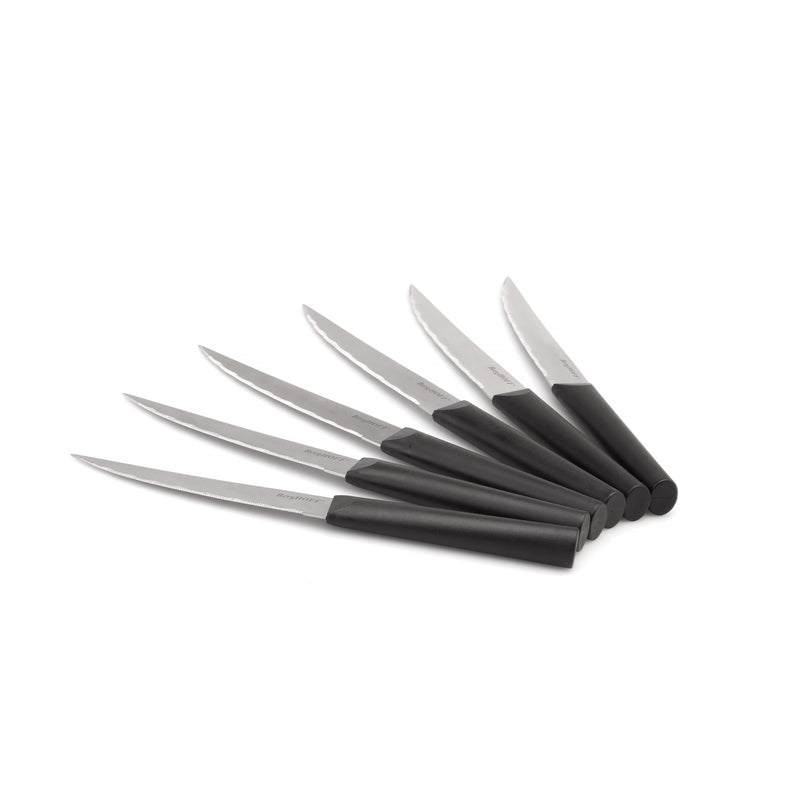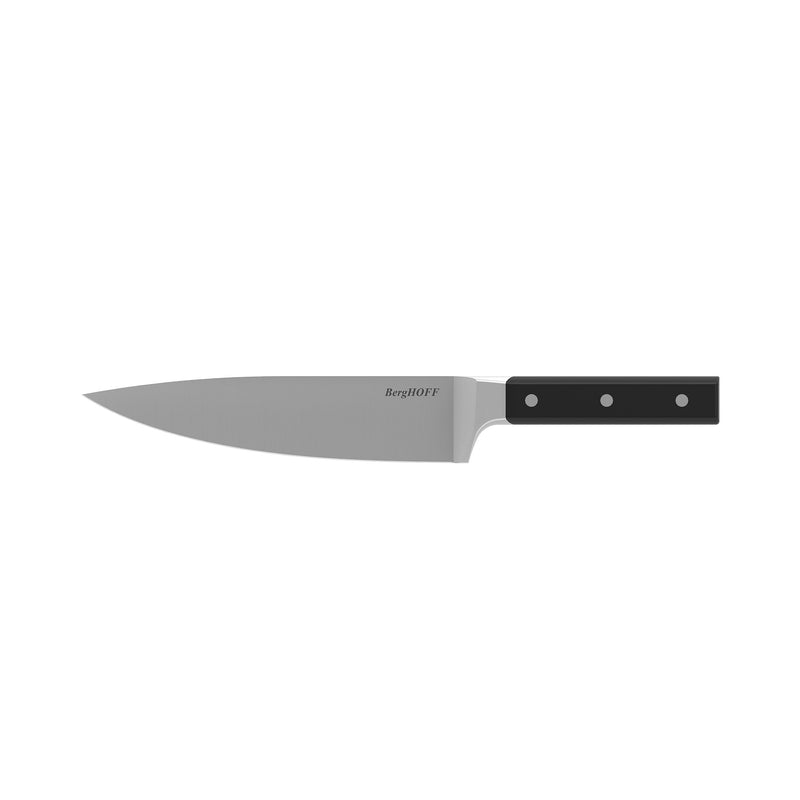
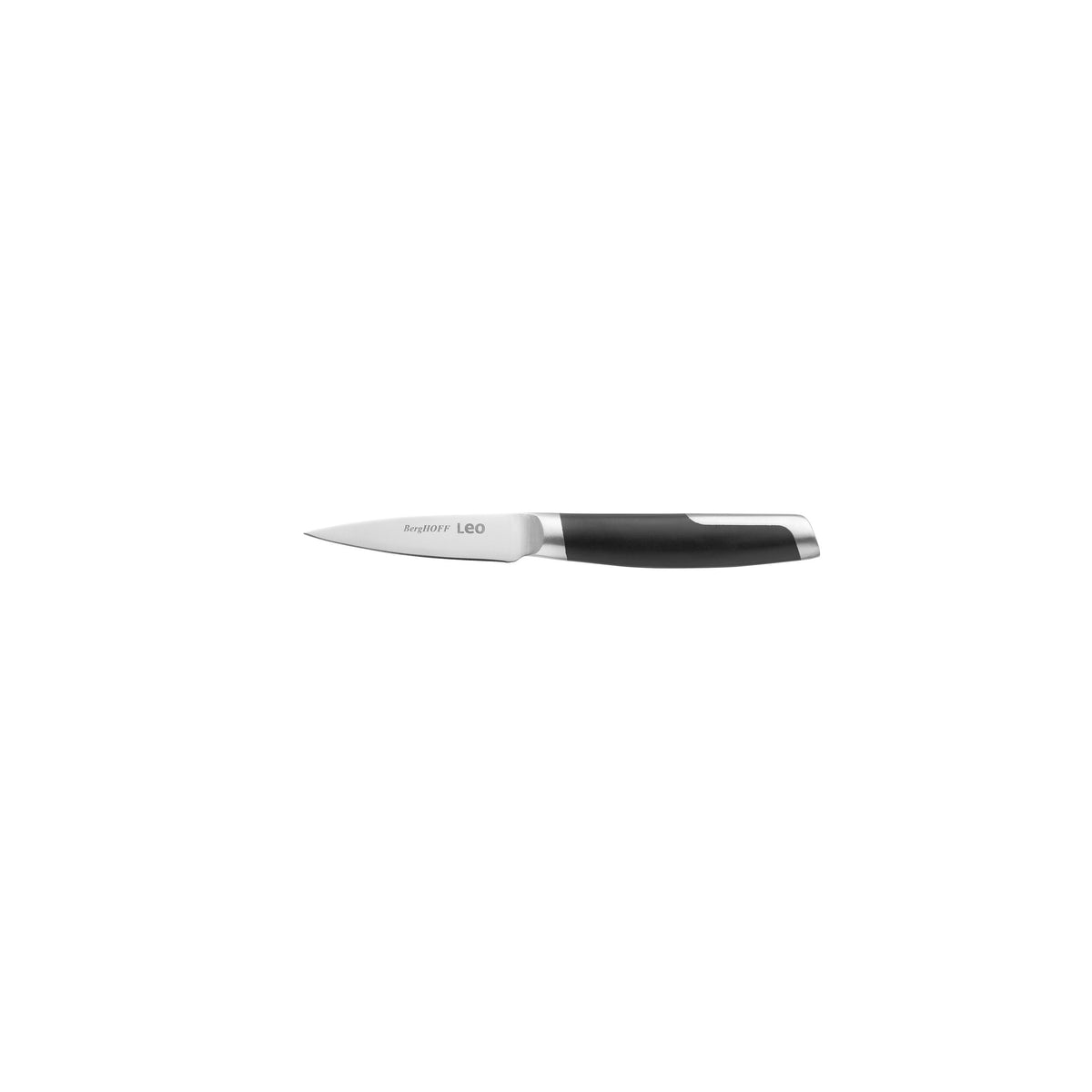
A paring knife is a small knife, usually with a blade of 8 to 10 cm, for the jobs that are too fiddly for a chef's knife: peeling and trimming fruit and vegetables, coring apples and tomatoes, deveining prawns, slicing a single clove of garlic, scoring the fat on a joint of meat. For most kitchens, a straight-edged paring knife of around 9 cm is the right choice. Add a serrated one if you often cut tomatoes, citrus or soft fruit.
Below you'll find what a paring knife is actually good at, how blade length and shape change the way it works, how it compares with a peeler and a utility knife, and how to look after it. BergHOFF paring knives, along with the rest of the brand's kitchen knives, are sold at berghoff.lv and its sister shops berghoff.lt, berghoff.ee, berghoff.fi, berghoff.se and berghoff.dk – the official BergHOFF online stores for the Baltics and the Nordics.
What is a paring knife used for?
Think of the paring knife as the precision tool of the knife block. Its short blade gives you control right at the tip, so it suits work done in the hand or on a small patch of the cutting board. Typical jobs include:
- Peeling and trimming. Apples, pears, potatoes, kiwis, mangoes: anything round that's awkward with a big blade.
- Coring and hulling. Taking the core out of apples and tomatoes, the hull out of strawberries, the seeds out of peppers and chillies.
- Small, neat cuts. Slicing a clove of garlic or a shallot, mincing a little ginger, cutting butter into cubes.
- Segmenting citrus. Cutting away the peel and pith of an orange or grapefruit, then lifting out the segments between the membranes.
- Prep for meat and fish. Scoring pork crackling or duck skin, trimming silver skin from a small fillet, deveining prawns.
- Checking doneness. The thin tip slips into a potato or a cake to see if it's cooked, without leaving a big gash.
What a paring knife isn't for: big vegetables like cabbage or squash, crusty bread, or anything with bones. Those need a longer, heavier blade.
How to choose a paring knife
Blade length
Paring knives usually come in lengths from about 6.5 to 10 cm. The shorter the blade, the more it behaves like an extension of your fingertip, which helps with peeling and decorative cuts. A blade of 9 to 10 cm reaches a little further, so it also handles a whole onion or a large apple on the board. If you're buying only one, 9 cm is a good middle ground.
In our paring and utility knives range, the Graphite, Legacy and Gene paring knives all have a 9 cm blade, and the Vector paring knife has a 10 cm blade.
Blade shape
There are three common shapes, and each suits a slightly different way of working.
- Straight (classic) paring knife. A straight edge with a pointed tip. It's the most versatile shape: good for peeling in the hand, coring, and small cuts on the board.
- Bird's beak or peeling knife. The blade curves downwards like a hook. It follows the shape of round fruit and vegetables, so it's handy for turning potatoes, peeling in long strips or making decorative cuts. It's less useful on the board, so it's usually a second paring knife rather than the first.
- Serrated paring knife. Small teeth bite into smooth, slippery skins without squashing what's inside. It's great for tomatoes, plums, citrus and soft rolls, but it gives a rougher cut and is harder to sharpen at home.
If you like the idea of a small serrated blade, the Gene serrated utility knife 12.5 cm is a little longer than a paring knife: it slices bagels and soft buns, and cuts through delicate fruit and vegetables without crushing them.
Handle and balance
Because you often hold a paring knife in the air rather than on the board, the handle matters as much as the blade. Picture how it will feel while your other hand turns an apple against the blade.
- The Graphite paring knife 9 cm (the full Graphite range) is well balanced, with a stainless steel blade and an ABS and stainless steel handle. It's made for slicing a garlic clove or segmenting a grapefruit, and peels fruit and vegetables without taking too much flesh with it.
- The Gene paring knife 9 cm has a forged, hand-sharpened blade with a satin finish and a full tang that runs through a triple-riveted handle: a classic feel if you're used to traditional knives.
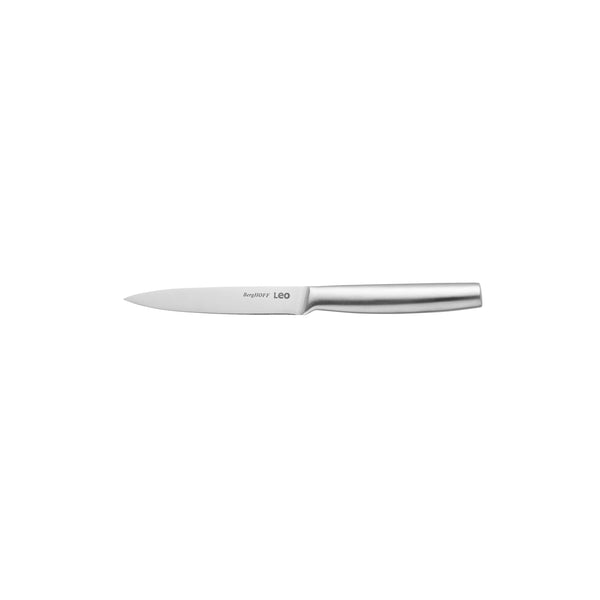
- The Legacy paring knife 9 cm is made from stainless steel all the way through, with a seamless join between the blade and the hollow handle, so there are no gaps where food can collect.
- The Vector paring knife 10 cm has a non-stick coated blade that helps food slide off, and a soft-grip handle that's easy to hold.
Paring knife vs peeler vs utility knife
These three overlap, and many kitchens have all of them. Here's how they differ.
| Paring knife | Peeler | Utility knife | |
|---|---|---|---|
| Typical size | 8–10 cm blade | Short slotted or Y-shaped blade | 12–15 cm blade |
| Best at | Trimming, coring, small precise cuts, peeling in the hand | Fast, thin peeling of carrots, potatoes, cucumbers | Slicing medium-sized foods: cheese, sausages, tomatoes, sandwiches |
| Weak spot | Slow for large amounts of peeling | Can't cut, core or trim | Less nimble for in-hand work |
| Who needs it | Everyone, as a partner to the chef's knife | Anyone who peels a lot of root veg | Anyone who often cuts small things without wanting to reach for the chef's knife |
A peeler is faster for a bag of potatoes, and it removes a thinner layer of skin. A paring knife does everything else: it cuts out eyes and bruises, cores and trims. If you peel a lot of vegetables, have both. You'll find straight and Y-shaped peelers, including a serrated Y-peeler, among our graters and peelers.
A utility knife is the paring knife's bigger sibling. The Graphite utility knife 12 cm, for example, handles peeling and slicing vegetables, cutting meat and even a loaf of bread. It's a useful in-between size, but its longer blade is less precise when you're working in your hand. They work best as a pair rather than as substitutes.
Paring knife and chef's knife: the essential pair
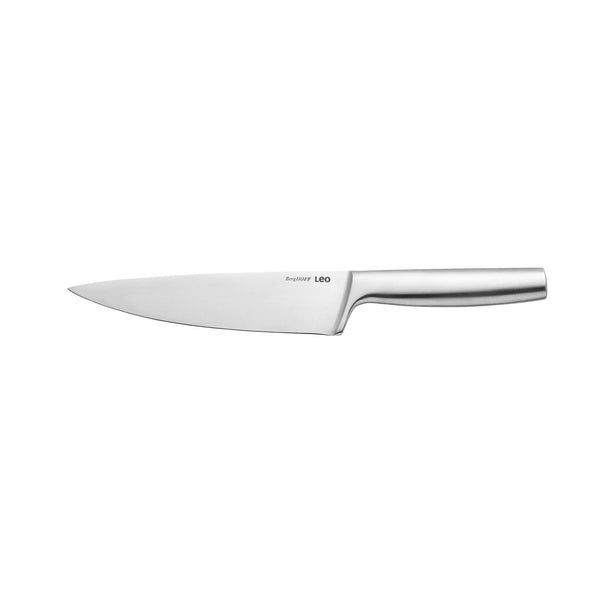
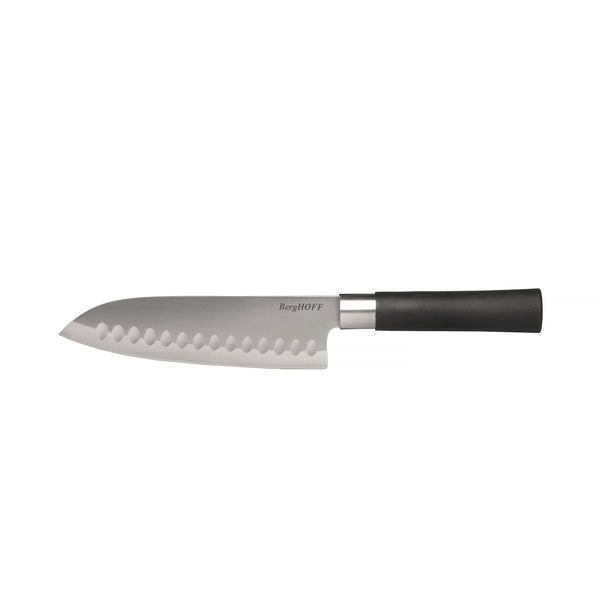
Most home cooking needs just two knives: a chef's knife or santoku for the big jobs, and a paring knife for the small ones. If you're still deciding on the big one, read santoku or chef's knife. For an overview of every knife type and how many you really need, see our guide to kitchen knives.
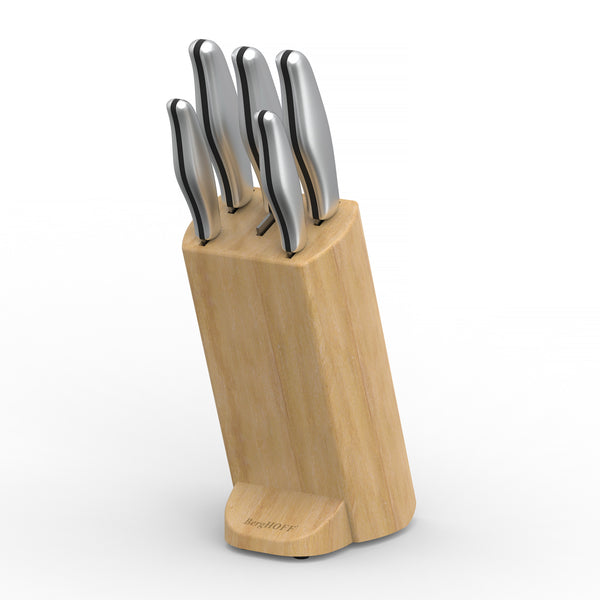
If you're starting from scratch, a set is the simplest route. The Legacy 3-piece starter knife set combines a 9 cm paring knife, a 12.5 cm utility knife and a 20 cm chef's knife. Most of our larger knife blocks also include a paring knife of 8 to 9 cm, and the Essentials 8-piece block has an even shorter 6.5 cm peeling knife. Browse them all under knife sets and blocks.
Shop by task
- Vegetables, fruit and herbs. Paring knives, santokus, kitchen scissors and a peeler for everyday veg prep are in knives for vegetables and herbs.
- Meat and fish. For trimming, filleting and carving, where a paring knife is too small, look at knives for meat and fish.
How to look after a paring knife
All the BergHOFF paring knives mentioned here are handwash recommended. Wash the knife in warm soapy water straight after use, especially after acidic foods like citrus or tomatoes, and dry it at once. Don't leave it in the sink, where it can get knocked about or cut someone reaching into the water.
Small knives often end up loose in a drawer, which is the quickest way to dull the tip and chip the edge. Keep yours in a knife block, on a magnetic strip or with a blade guard. When you use it on the board, choose wood, bamboo or plastic rather than glass or stone; our cutting board guide explains the options.
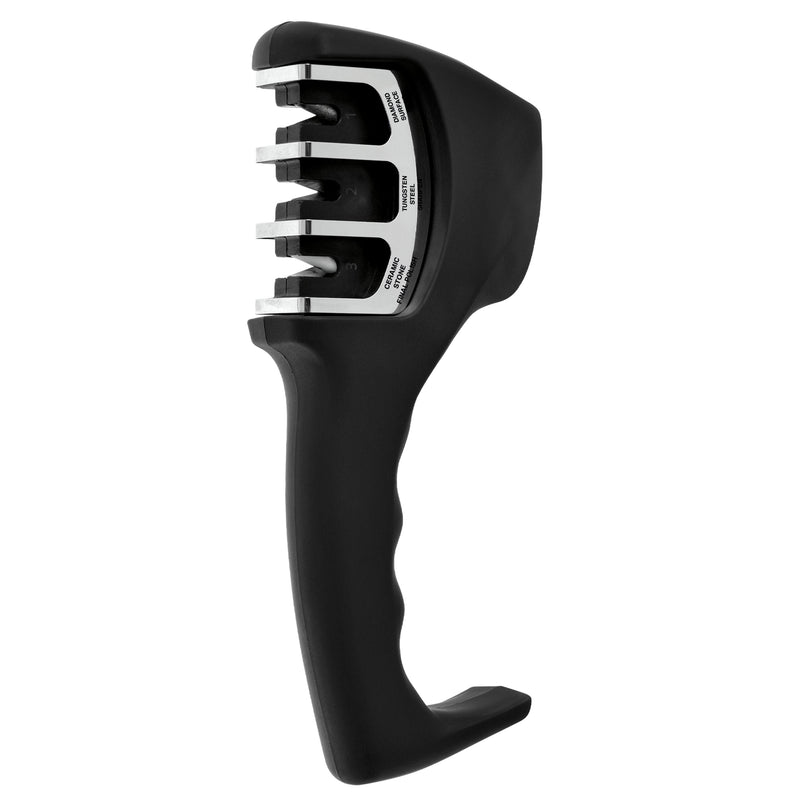
A sharp paring knife is safer than a blunt one, because it's less likely to skid off a tomato skin and towards your fingers. A straight edge can be sharpened just like your bigger knives, and our guide on how to sharpen kitchen knives walks you through it. Serrated blades are harder to sharpen at home and are best left alone until they really stop cutting.
Read also: Knife block or knife set: how to choose the right set and store it safely
In our range: Graphite Utility Knife 12 cm; Legacy Utility Knife 12.5 cm; Legacy Paring Knife 9 cm
Frequently asked questions
What size paring knife is best?
For most people, a blade of about 9 cm. It's small enough for peeling in the hand and long enough to handle a whole onion or apple on the board.
Is a paring knife the same as a peeling knife?
Not quite. "Peeling knife" often means a bird's beak knife with a curved blade, made specifically for peeling round produce. A classic paring knife has a straight edge and handles a wider range of small tasks.
What's the difference between a paring knife and a utility knife?
Length and purpose. A paring knife is around 8 to 10 cm and is built for precise, often in-hand work. A utility knife is around 12 to 15 cm and is better for slicing medium-sized foods on the board.
Do I need a serrated paring knife?
Only if you cut a lot of tomatoes, citrus or soft fruit. A sharp straight paring knife handles them too; the serrated version simply grips smooth skins more easily.
Can I put a paring knife in the dishwasher?
It's better not to. Hand washing keeps the edge sharper for longer and protects the handle, and it's what we recommend for all of our paring knives.
Where in the Baltics and the Nordics can I buy an original BergHOFF paring knife?
Original BergHOFF paring knives are sold at berghoff.lv and its sister shops berghoff.lt, berghoff.ee, berghoff.fi, berghoff.se and berghoff.dk, the official BergHOFF online stores for the Baltics and the Nordics. Delivery times differ by country: orders to Latvia, Lithuania and Estonia usually arrive within 1–2 business days, and orders to Finland, Sweden and Denmark within 2–3 business days. Delivery is free for orders of €59 or more (or the equivalent in your currency), and as a consumer you can withdraw from your purchase within 14 days without giving a reason.