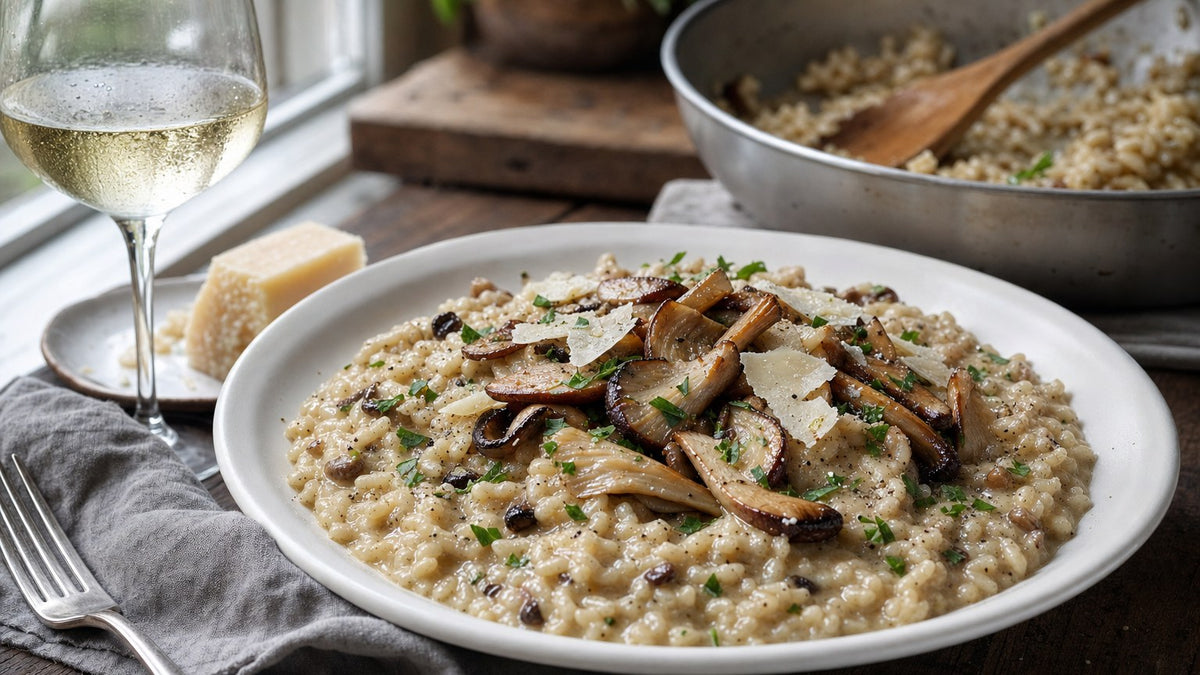
Mushroom risotto is the risotto most people fall for first: creamy rice, deep mushroom flavour from a handful of dried porcini, a splash of white wine, and butter and parmesan beaten in at the end. It is not difficult, but it does ask for twenty minutes of your attention at the stove. This method keeps the three things that make or break a risotto under control: the stock stays hot in a saucepan beside you, the mushrooms are browned separately so they actually taste of something, and the rice cooks in a wide sauté pan where it absorbs the liquid evenly. Four servings take about an hour.
| Prep | 20 minutes (the porcini soak while you chop) |
|---|---|
| Cooking | 40 minutes |
| Total | about 1 hour |
| Servings | 4 |
| Difficulty | Medium – simple steps, but stay at the pan |
| You will need | 28 cm sauté pan, 16–18 cm saucepan for the stock, ladle, wooden spoon, fine sieve, grater |
Ingredients
For the stock
- 20 g dried porcini mushrooms
- 250 ml boiling water
- 1 l chicken or vegetable stock
For the mushrooms
- 400 g mixed fresh mushrooms (chestnut, oyster, a few chanterelles), sliced
- 2 tablespoons olive oil
- 2 garlic cloves, finely chopped
- 3 sprigs fresh thyme, leaves picked
- salt and freshly ground black pepper
For the risotto
- 25 g butter
- 1 tablespoon olive oil
- 2 shallots (or 1 small onion), finely chopped
- 320 g arborio or carnaroli rice
- 150 ml dry white wine
To finish
- 40 g cold butter, cut into cubes
- 60 g parmesan, finely grated, plus shavings to serve
- 2 tablespoons chopped flat-leaf parsley
Method
- Soak the porcini. Put the dried porcini in a bowl, pour over the boiling water and leave for 20 minutes. Lift them out, squeeze gently and chop roughly. Strain the soaking liquid through a fine sieve lined with kitchen paper, leaving the gritty last spoonful behind.
- Keep the stock hot. Pour the stock and the strained porcini liquid into a 16–18 cm saucepan, bring to a simmer and keep it just below boiling, lid half on. Cold stock stops the cooking and makes the risotto gluey.
- Fry the fresh mushrooms. Heat the 2 tablespoons of olive oil in a 28 cm sauté pan over high heat. Add the mushrooms in a single layer – in two batches if needed – and leave them alone for 2 minutes so they brown instead of stewing. Cook for 6–8 minutes until golden, stir in the garlic and thyme for the last 30 seconds, season and tip onto a plate.
- Soften the shallots. Turn the heat down to medium and melt the 25 g of butter with the tablespoon of olive oil in the same pan. Cook the shallots for 4–5 minutes until soft but not browned, then add the chopped porcini and stir for a minute.
- Toast the rice. Add the rice and stir it through the butter for 1–2 minutes until the grains are hot and glassy at the edges with a white dot in the middle.
- Add the wine. Pour in the wine – it should hiss – and stir until it has almost all been absorbed and the smell of alcohol has gone, about 2 minutes.
- Add the stock, a ladle at a time. Add a ladleful of hot stock and stir often – every half minute or so, not non-stop – over medium heat. When a spoon dragged across the base leaves a trail that fills slowly, add the next ladle. Carry on for 16–18 minutes. Taste from 15 minutes: the rice should be tender with a slight bite, and the whole pan should move like a slow wave when you shake it.
- Return the mushrooms. Two minutes before the rice is done, stir in about three quarters of the fried mushrooms, keeping the rest for the top, with one last half ladle of stock so the risotto stays loose.
- Beat in butter and parmesan. Off the heat, add the cold butter cubes and the grated parmesan and beat hard with a wooden spoon for about a minute until glossy and creamy. Lid on, rest for 2 minutes, then season with salt and plenty of black pepper. If it has tightened up, loosen it with a splash of stock: it should spread slowly on the plate.
- Serve. Spoon into warm shallow bowls, top with the reserved mushrooms, parmesan shavings and parsley, add a grind of pepper and serve straight away.
What to cook risotto in
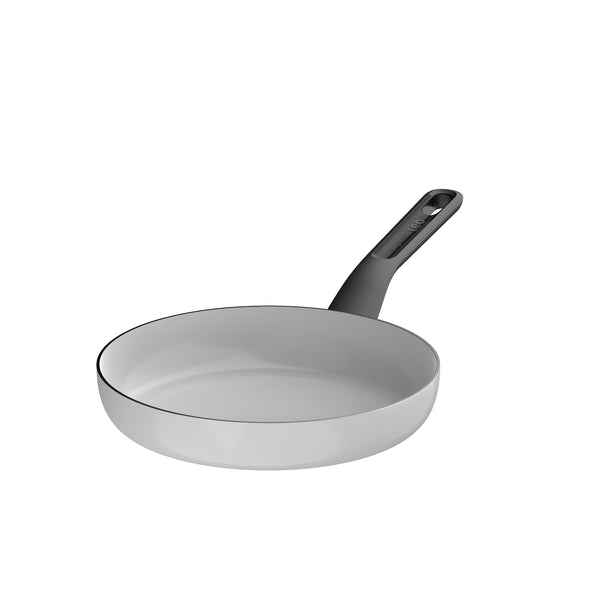
Risotto wants a pan that is wide rather than tall: the rice sits in a shallow layer, every grain meets the hot stock and the liquid evaporates at a steady rate, so you can judge when the next ladle is due. A thick base matters too – twenty minutes over medium heat with the sugars from shallots and wine scorches thin metal. Pans shaped for exactly this are grouped under sauté pans: straight, high sides, two handles and a lid. The guide sauté pan or frying pan explains where each shape wins.
Non-stick sauté pan 28 cm for the risotto
The Stone+ Non-stick Covered 2-Handle Sauté Pan 28 cm is the one to reach for if you worry about rice catching. Its recycled cast aluminium body heats fast and evenly on any cooktop, including induction, and the CeraGreen ceramic non-stick coating (PFAS-free according to the manufacturer) means nothing sticks when you stop to grate cheese. At 4.7 l (inside 28 × 28 × 8.5 cm) it holds 320 g of rice and all its stock with room to beat in the butter, and the lid knob doubles as a spoon rest. Hand washing is recommended.
A small saucepan for the stock
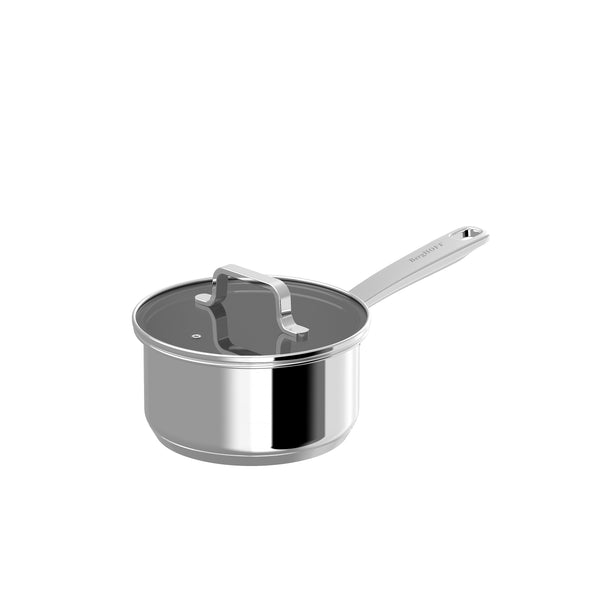
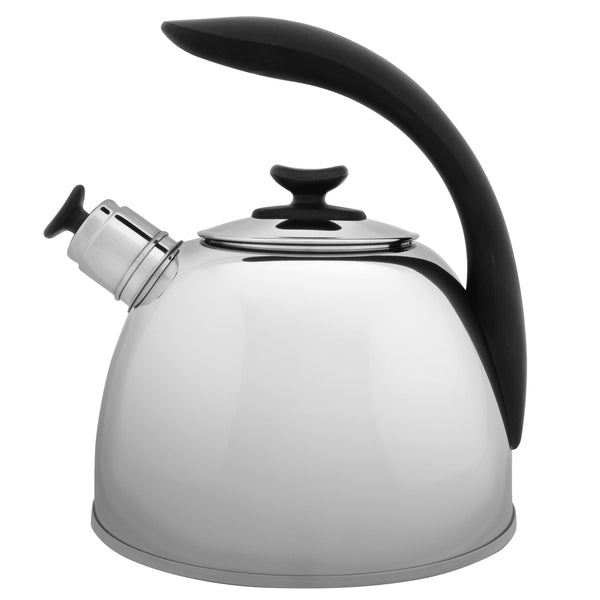
The second pan matters just as much, because the stock must stay hot throughout. The Stone+ Non-stick Covered Saucepan 18 cm holds 2 l, so 1.25 l of stock simmers in it without creeping up the sides, and the stay-cool handle lets you tilt it towards the ladle. It suits all cooktops, including induction. Other sizes are in saucepans, the wider range in pots. Complete your kitchen: a saucepan for the stock and a larger pot for making it from scratch come together in the pot sets.
Tips and common mistakes
- Gluey, heavy risotto. Cold stock, or all of it at once. Hot stock, a ladle at a time, draws the starch out gradually into a sauce rather than a paste.
- Grey, soggy mushrooms. Too many in the pan, stirred too early. High heat, a single layer, two batches, no stirring for the first two minutes.
- Risotto that sets like pudding. It left the pan too tight. Risotto keeps thickening on the plate, so stop a little looser than looks right.
- Rinsing the rice. Never – the surface starch is the cream of the risotto.
Variations
Porcini risotto
Double the dried porcini to 40 g and leave out the fresh mushrooms; soak them in 400 ml of water and reduce the stock to 850 ml. Darker and more intense – finish with thyme rather than parsley.
Dairy-free mushroom risotto
Use vegetable stock, beat in 3 tablespoons of good olive oil instead of the butter and leave out the cheese – the porcini give more depth than you expect.
Baked mushroom risotto
Follow the recipe to the end of step 6, add all the hot stock, put the lid on and bake at 180 °C for 20–25 minutes until the rice is tender. Back on the stove, stir in the mushrooms and finish as in step 9. The Stone+ pan above is ovenproof: 230 °C without its silicone sleeves, 180 °C for the lid.
What to serve with mushroom risotto
In Italy risotto is a course on its own and needs no more than a green salad and the rest of the wine. For a bigger dinner, slice a pan-seared chicken breast over the top. If you like the parmesan-and-pepper side of Italian cooking, try spaghetti carbonara without cream; the same patience with heat also makes a good French omelette.
Frequently asked questions
How do you make mushroom risotto creamy without cream?
From the rice itself. Arborio and carnaroli release starch as they are stirred with small amounts of hot stock, and that starch thickens the liquid into a sauce; cold butter and parmesan beaten in off the heat turn it glossy. Cream only makes it heavy.
Which rice is best for risotto?
Carnaroli is the chef's choice: it holds its shape and forgives an extra minute. Arborio is easier to find and gives a slightly softer, stickier result. Long-grain, basmati and jasmine rice do not work.
Can I make risotto in advance?
Restaurants do: cook the rice to about two thirds (12 minutes of stock), spread it on a tray to cool quickly and refrigerate for up to a day. To finish, simmer it with more hot stock for 5–6 minutes, then add the mushrooms, butter and parmesan as usual.
The photo is illustrative (AI-generated).