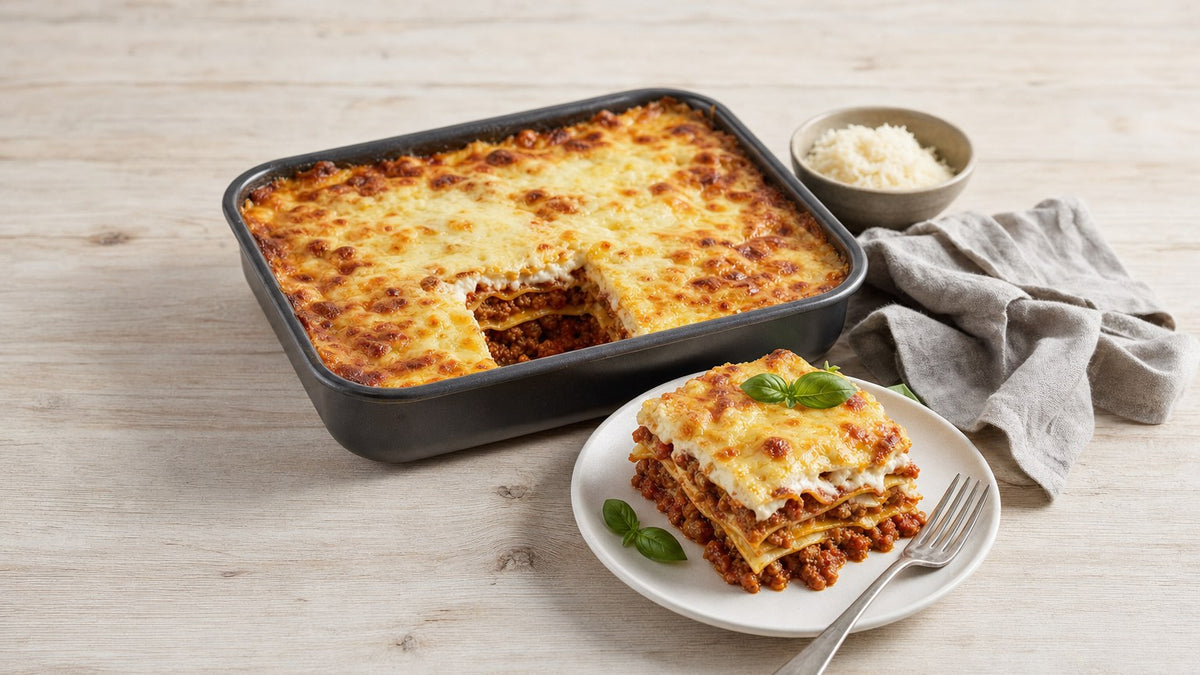
A classic beef lasagne is layers of pasta, slow-simmered beef ragù and creamy béchamel, finished with parmesan and mozzarella and baked until golden and bubbling. This lasagne recipe feeds 6–8 people and takes about 2 hours 40 minutes, of which only half an hour is hands-on. It works because a thick ragù and a smooth white sauce give the dried sheets just enough liquid to cook in the oven, with no boiling first, and a 34 × 25.5 cm tin gives three neat layers.
| Preparation | 30 minutes |
|---|---|
| Cooking | about 2 hours 10 minutes (ragù 1 hour 10 minutes, oven 45–50 minutes, resting 15 minutes) |
| Total | about 2 hours 40 minutes |
| Servings | 6–8 |
| Difficulty | Medium |
| What you need | A wide sauté pan (about 28 cm), a saucepan of at least 2 litres, a whisk, a 34 × 25.5 cm rectangular tin, foil |
Ingredients for lasagne
For the beef ragù
- 2 tbsp olive oil
- 1 onion (about 150 g), finely chopped
- 1 carrot (about 100 g), finely chopped
- 1 celery stick, finely chopped
- 2 garlic cloves, crushed
- 800 g beef mince (15–20% fat)
- 2 tbsp tomato paste
- 150 ml dry red wine (or beef stock)
- 1 × 400 g tin chopped tomatoes
- 500 g passata
- 200 ml water or beef stock
- 1 tsp dried oregano
- 1 bay leaf
- 1 tsp salt
- ½ tsp freshly ground black pepper
For the béchamel
- 60 g butter
- 60 g plain flour
- 1 litre whole milk
- ½ tsp salt
- ¼ tsp freshly grated nutmeg
To assemble
- about 300 g dried lasagne sheets (the no-pre-cook kind), 16–18 sheets depending on size
- 80 g parmesan, finely grated
- 125 g mozzarella (1 ball), drained and torn into small pieces
- a few fresh basil leaves, to serve
How to make lasagne
- Start the ragù. Heat the olive oil in a wide sauté pan (about 28 cm) over a medium heat. Add the onion, carrot and celery with a pinch of the salt and cook for 8–10 minutes, stirring now and then, until soft and sweet but not browned. Stir in the garlic and cook for 1 minute more.
- Brown the beef. Turn the heat up to medium-high and add the mince. Break it up with a wooden spoon and cook for 8–10 minutes, until all the liquid it releases has evaporated and the meat starts to brown and sizzle.
- Add the tomato paste and wine. Stir in the tomato paste and cook for 1–2 minutes. Pour in the wine and let it bubble for about 2 minutes, scraping the base of the pan, until it has almost disappeared.
- Simmer the ragù. Add the chopped tomatoes, passata, water, oregano, bay leaf, the rest of the salt and the pepper. Bring to a simmer, partly cover and cook over a low heat for 45 minutes, stirring from time to time. It should end up thick but still saucy, as the sheets soak up liquid in the oven; add a splash of water if it gets too dry. Remove the bay leaf and taste for salt.
- Make the béchamel. While the ragù simmers, melt the butter in a saucepan of at least 2 litres over a medium heat. Stir in the flour and cook for 1–2 minutes without letting it colour. Off the heat, whisk in the milk a little at a time until smooth. Return to the heat and whisk until the sauce boils and thickens, then simmer gently for 3–4 minutes. Season with the salt and nutmeg.
- Heat the oven. Heat the oven to 190 °C (170 °C fan) and place a baking tray on the middle shelf.
- Layer the lasagne. Spread 4 tbsp of béchamel thinly over the base of a 34 × 25.5 cm rectangular tin. Cover with a single layer of lasagne sheets, snapping pieces to fill the gaps. Spread over half the ragù, then a third of the remaining béchamel and a third of the parmesan. Repeat with sheets, the rest of the ragù, another third of the béchamel and parmesan. Top with a final layer of sheets, cover them completely with the last of the béchamel and scatter over the mozzarella and remaining parmesan.
- Bake. Set the tin on the hot tray to catch drips, cover loosely with foil and bake for 25 minutes. Remove the foil and bake for another 20–25 minutes, until the top is golden and bubbling at the edges and a knife slides easily through the pasta.
- Rest and serve. Leave the lasagne to rest for 15 minutes so the layers set and hold their shape. Cut it into 6 or 8 portions, lift them out with a spatula and scatter over a few basil leaves.
What to make lasagne in
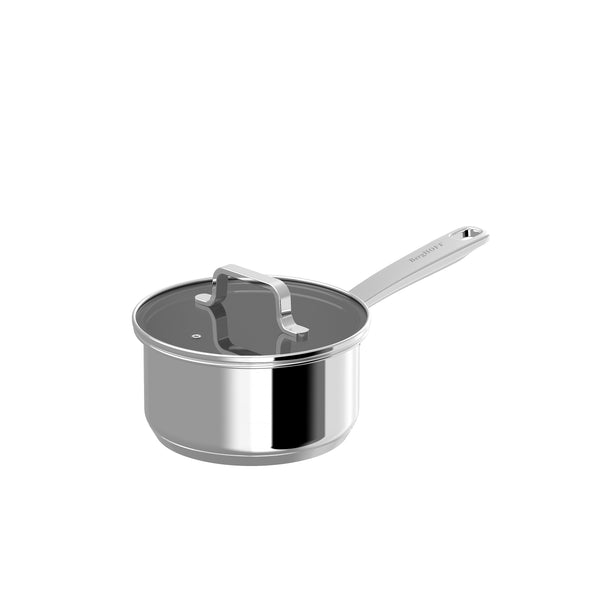
Lasagne needs a wide pan for the ragù, a saucepan for the béchamel and a sturdy tin. In a wide pan the mince browns instead of stewing and the sauce reduces faster. You will find pots and tools for pasta dishes in our cookware for pasta, and oven tins in our bakeware.
A rectangular tin that fits three layers
The Balance non-stick rectangular cake pan 34 × 25.5 cm is the size this recipe is written for. Inside it measures 34 × 25.5 × 4.6 cm and holds 4 litres, enough for three layers of sheets with ragù and béchamel. The lightweight carbon steel has a non-stick coating, so baked-on cheese releases easily, and the diamond-textured base helps it bake evenly. It is ovenproof up to 230 °C, and grid lines on the side help you cut equal portions. Hand washing is recommended.
A large sauté pan for the ragù
The Stone+ non-stick covered 2-handle sauté pan 28 cm holds 4.7 litres and has straight sides 8.5 cm high, so the whole ragù fits with room to stir. The recycled cast aluminium body heats quickly and evenly, and the CeraGreen ceramic non-stick coating stops the thick sauce catching on the base. It works on all hobs, including induction. Hand washing is recommended.
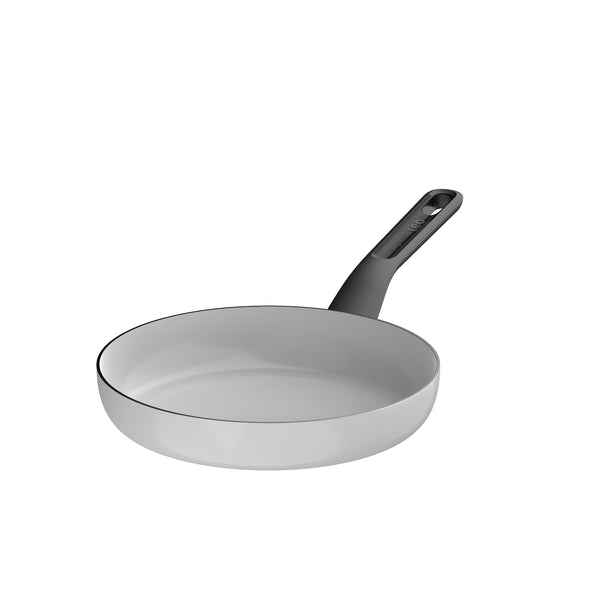
Complete your kitchen: a frying pan is the piece you will reach for most often, and our frying pan sets give you two or three sizes at once. Our sauté pan vs frying pan guide explains which does what.
Tips and common mistakes
- The lasagne is runny when you cut it. It was cut too soon, or the ragù was too thin. Rest it for the full 15 minutes, and simmer the ragù until a spoon drawn across the pan leaves a clear trail.
- The pasta is still firm in places. Dried sheets need sauce on both sides to soften. Cover every sheet, especially at the edges and on top, and keep the foil on for the first 25 minutes.
- The béchamel is lumpy. The milk went in too quickly. Add it off the heat, a little at a time, whisking well. If lumps appear, push the sauce through a sieve.
- Protect the non-stick tin. Cut gently and lift the portions out with a nylon or silicone spatula rather than a metal one.
Variations
Vegetarian lasagne
For a vegetarian lasagna recipe, replace the beef with 500 g of finely chopped mushrooms, browned in batches, and a 400 g tin of drained green or brown lentils. Use vegetable stock instead of beef stock and check that your parmesan is made without animal rennet, or use a vegetarian hard cheese.
Beef and pork ragù
Swap 300 g of the beef for pork mince for a softer, richer ragù, and replace 100 ml of the water with milk, added just after the wine; it makes the sauce rounder and less acidic.
What to serve with lasagne
Lasagne is a meal on its own, so keep the sides simple: a crisp green salad with a sharp vinaigrette cuts through the richness, and garlic bread is always welcome. For a quick Italian weeknight dinner, try our spaghetti carbonara, and if you like slow-cooked mince, our chili con carne starts the same way.
Lasagne FAQ
Do you need to boil lasagne sheets first?
Not with this recipe. Most dried sheets today need no pre-cooking if they are fully covered with sauce. If your packet says to pre-cook, boil them for 2–3 minutes and lay them on an oiled tray.
How long should lasagne bake, and at what temperature?
At 190 °C (170 °C fan), bake it for 25 minutes under foil and 20–25 minutes uncovered, then rest it for 15 minutes.
Can I make lasagne ahead or freeze it?
Yes. Assemble it, cover and chill for up to 24 hours, then add 10–15 minutes to the covered baking time. Baked lasagne keeps in the fridge for 3 days and freezes in portions for up to 3 months; thaw overnight in the fridge and reheat until piping hot.
Is it lasagne or lasagna?
Both are correct. In Italian, lasagna is one sheet of pasta and lasagne is the plural. British English usually says lasagne, American English lasagna; the dish is the same.
The photo is illustrative (created with AI).