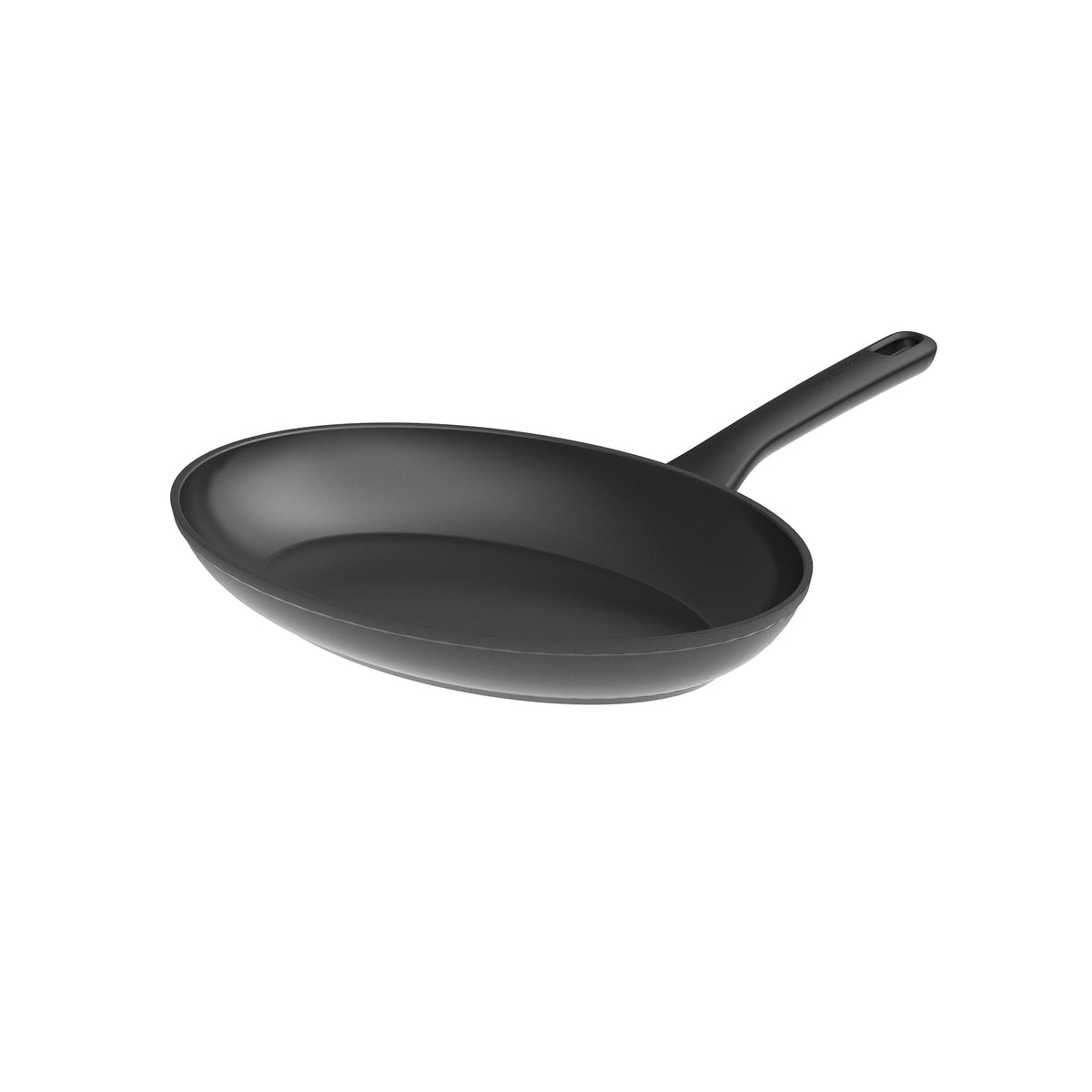
To pan-fry salmon, pat the fillets dry, season them, and lay them skin side down in a hot pan with a thin film of oil. Leave them alone for most of the cooking time, until the flesh has turned pale about three-quarters of the way up the sides, then flip and give them a minute or two on the other side. A fillet about 2.5 cm thick takes 6 to 8 minutes in total. For the crispiest skin, use stainless steel or cast iron. For the easiest release with the least fuss, use a non-stick pan.
How to pan-fry salmon step by step
1. Take the fillets out of the fridge early
Give the salmon 15 to 20 minutes on the worktop. A fillet that isn't fridge-cold cooks more evenly.
2. Dry the skin properly
This step makes or breaks crispy skin. Pat both sides with kitchen paper, pressing firmly on the skin until the paper comes away dry. Any moisture left turns to steam in the pan, and steamed skin goes soft and rubbery. If the skin has any scales left on it, scrape them off with the back of a knife.
3. Season just before cooking
Salt the skin and flesh right before the fish goes into the pan. If salted salmon sits for too long, the salt draws moisture back to the surface. Pepper can go on now or at the end.
4. Heat the pan, then the oil
Put the pan on a medium-high heat for a minute or two, then add a thin layer of oil with a high smoke point, such as sunflower or rapeseed oil. The oil is ready when it shimmers and flows easily as you tilt the pan. Save butter for later: on its own it burns before the skin has had time to crisp.
5. Lay the fillets in skin side down and press
Lay each fillet in the pan away from you so the oil doesn't spit towards you. As soon as it touches the pan the skin tightens and the fillet tries to curl up, so press gently on top with a fish slice or your fingers for 15 to 20 seconds. This keeps the whole skin in contact with the pan and helps it brown evenly.
6. Leave it alone
Turn the heat down slightly to medium and let the salmon cook undisturbed. You'll see the colour change from translucent orange to opaque pink, creeping up the sides of the fillet. Resist the urge to move it: if the skin seems stuck, it will release by itself once it has crisped.
7. Flip briefly and finish
When the fillet is cooked about three-quarters of the way through, turn it over and cook the flesh side for 1 to 2 minutes. If you like, add a knob of butter, a crushed garlic clove and a sprig of thyme at this point and spoon the foaming butter over the fish. Then lift it out onto a plate, skin side up, so the skin stays crisp.
How long to pan-fry salmon
Thickness matters more than weight. Check the thickest part of the fillet and use these times as a starting point on a medium to medium-high heat:
- About 1.5 cm (thin tail pieces): 3 to 4 minutes skin side down, then about 30 seconds to 1 minute on the other side.
- About 2.5 cm (a typical supermarket fillet): 5 to 6 minutes skin side down, then 1 to 2 minutes on the other side.
- About 3.5 to 4 cm (thick centre-cut fillets): 6 to 7 minutes skin side down, then 2 to 3 minutes on the other side. Very thick pieces can also go into a hot oven for a few minutes to finish, as long as your pan is ovenproof.
Skinless fillets cook a little faster, because there's no skin to insulate the flesh. Give them 2 to 3 minutes per side for a 2.5 cm piece.
How to tell when salmon is done
Salmon goes from juicy to dry quickly, so check it a little early rather than late. There are three easy cues:
- Colour: the flesh turns from deep, glossy orange to a paler, opaque pink. If you like it slightly translucent in the middle, take it off the heat while a thin stripe of darker colour remains in the centre.
- Flaking: press the top with a finger or ease a fork into the thickest part. When the flesh starts to separate into flakes, it's ready.
- Temperature: if you have a probe thermometer, around 50 to 52 °C in the centre gives moist, just-set salmon. Around 60 °C gives a firm, fully opaque result.
Remember that salmon keeps cooking for a minute after you take it out of the pan, so lift it off when it's almost where you want it.
Common mistakes when frying salmon
- Wet skin. The number one reason for soggy skin. Dry it thoroughly, then dry it again.
- A cold pan. If the oil isn't hot when the fish goes in, the skin sticks and tears instead of searing.
- Too many fillets at once. Crowding drops the pan temperature and the fish starts to steam. Leave a few centimetres between pieces. A 28 cm pan comfortably fits two to three fillets; our guide to frying pan sizes helps if you regularly cook for more people.
- Moving the fish too early. If you try to lift it and it resists, it isn't ready. Wait another minute.
- Giving both sides equal time. Most of the cooking should happen on the skin side. The flesh side only needs a short finish.
Which pan is best for salmon?
You can cook excellent salmon in several types of pan; it depends on whether crispy skin or easy cooking matters more to you. For a wider comparison, see our article on stainless steel vs non-stick frying pans.
| Pan type | Skin result | Heat | Cleaning |
|---|---|---|---|
| Non-stick (ceramic coating) | Golden and crisp, slightly less deeply browned; very easy release | Medium to medium-high; no need for very high heat | Very easy; hand washing is usually recommended to protect the coating |
| Stainless steel | The crispiest, most evenly browned skin | Medium-high to start; the pan must be properly preheated | Needs soaking or a scrub if bits stick; usually dishwasher safe |
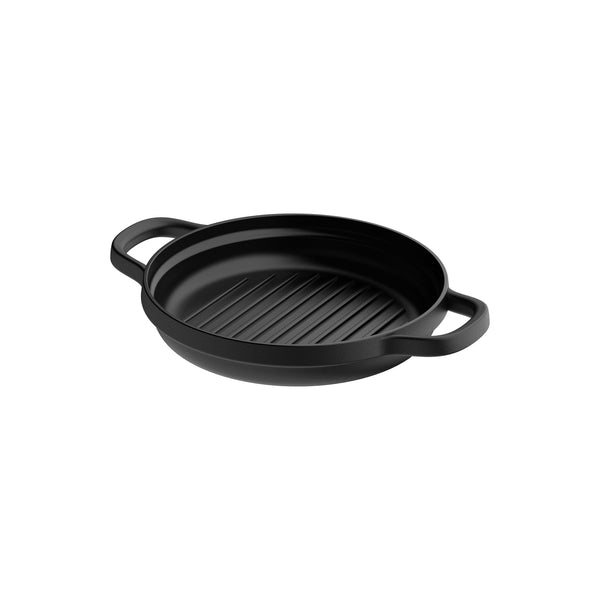
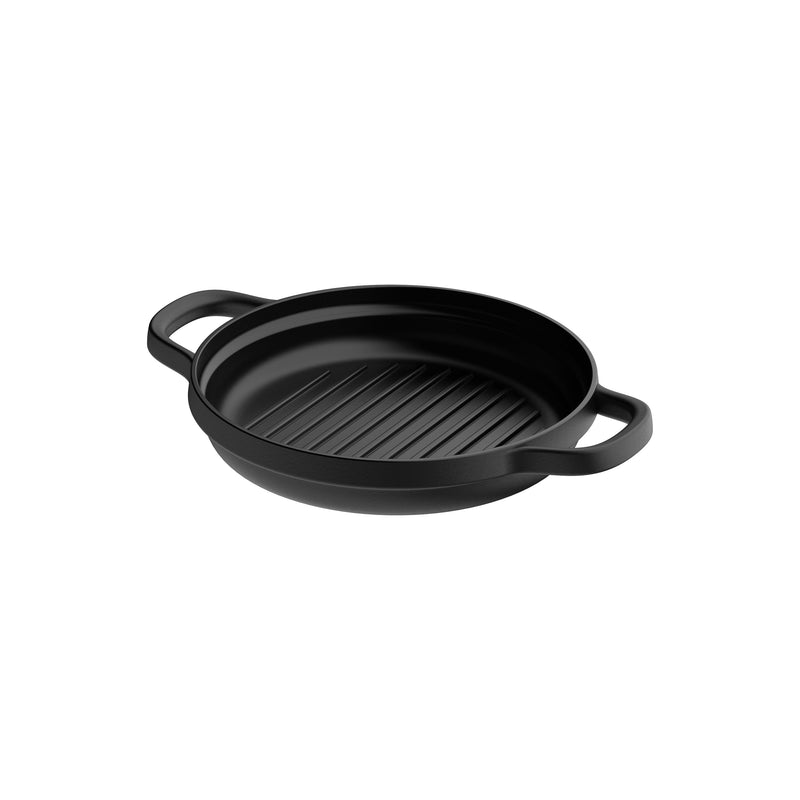
| Cast iron grill pan | Charred stripes rather than an all-over crisp skin; smoky flavour | High; holds heat very well | Hand wash; let it soak and use a brush for the ridges |
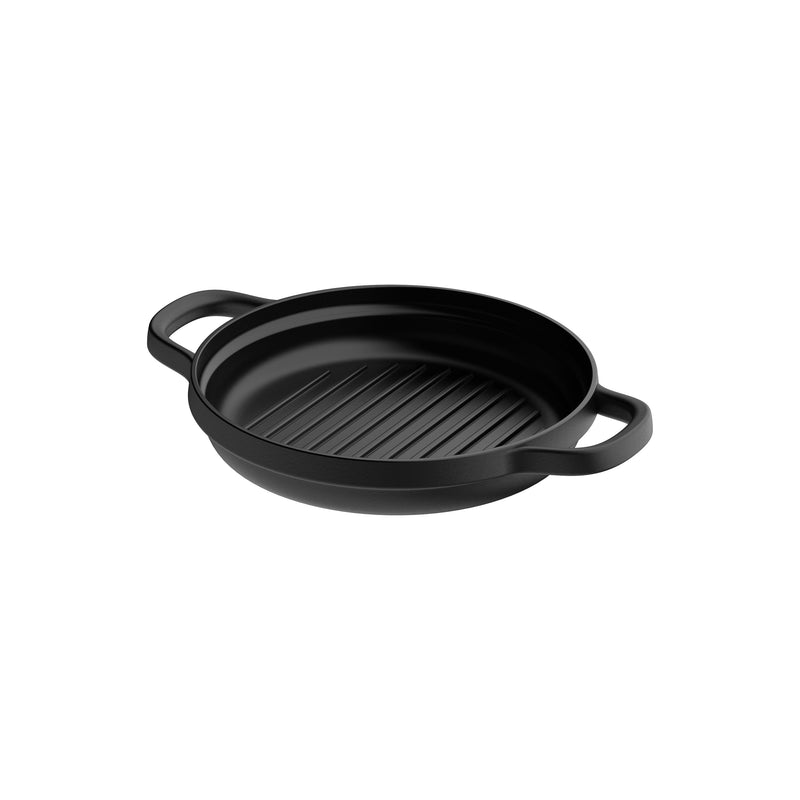
| Non-stick grill pan | Grill marks and easy release; skin less crisp than in a flat pan | Medium-high | Easy; hand washing is usually recommended |
Non-stick: the easy option
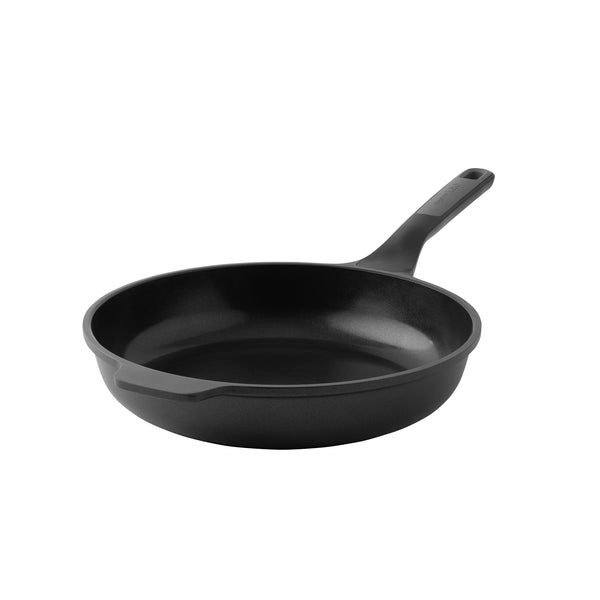
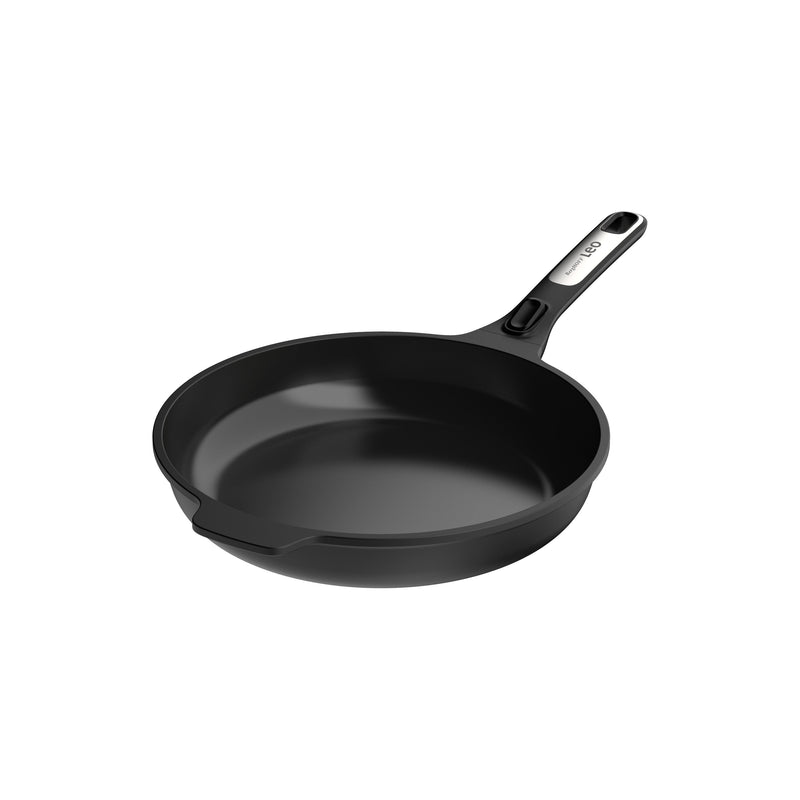
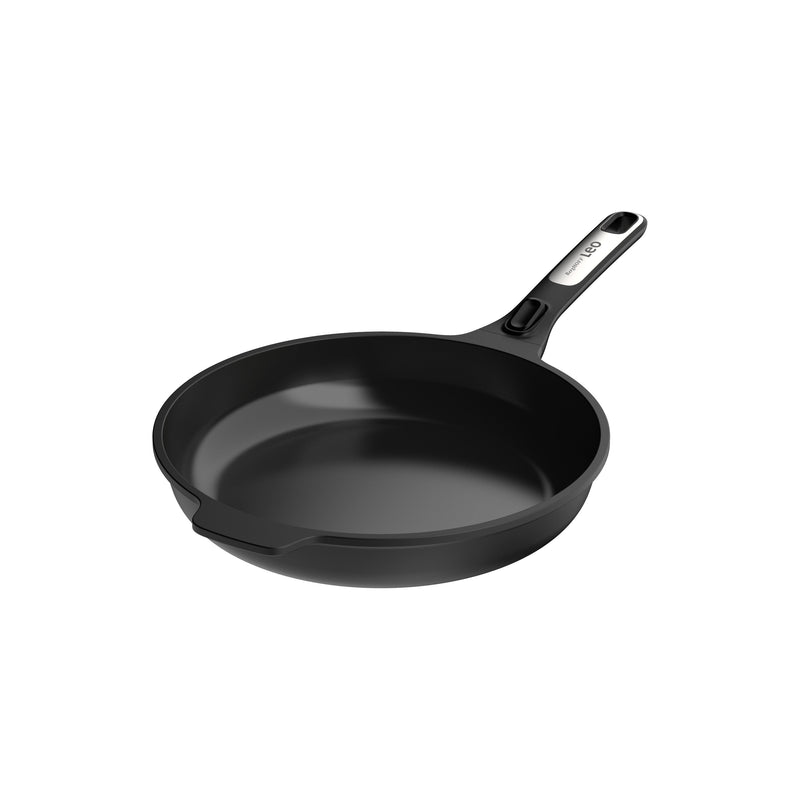
A non-stick pan is the most forgiving choice, especially if you don't cook fish very often. The fillet releases easily, you need very little oil, and delicate skinless pieces don't break when you turn them. You'll still get crisp skin if you dry it well and preheat the pan. Browse our non-stick pans for everyday options. If you cook fish often, the Helix non-stick fish pan (34 × 24 cm) is sized for long fillets or a whole small fish. It has a CeraGreen ceramic coating that is PFAS-free according to the manufacturer, works on all cooktops including induction and is ovenproof up to 180 °C.
Stainless steel: for the crispiest skin
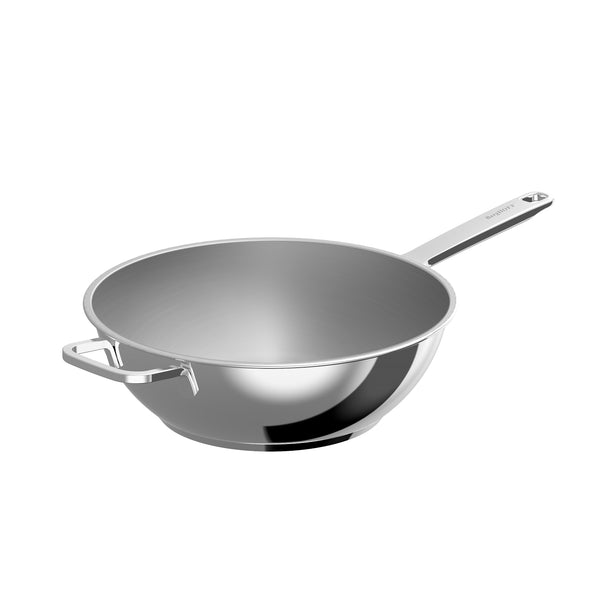
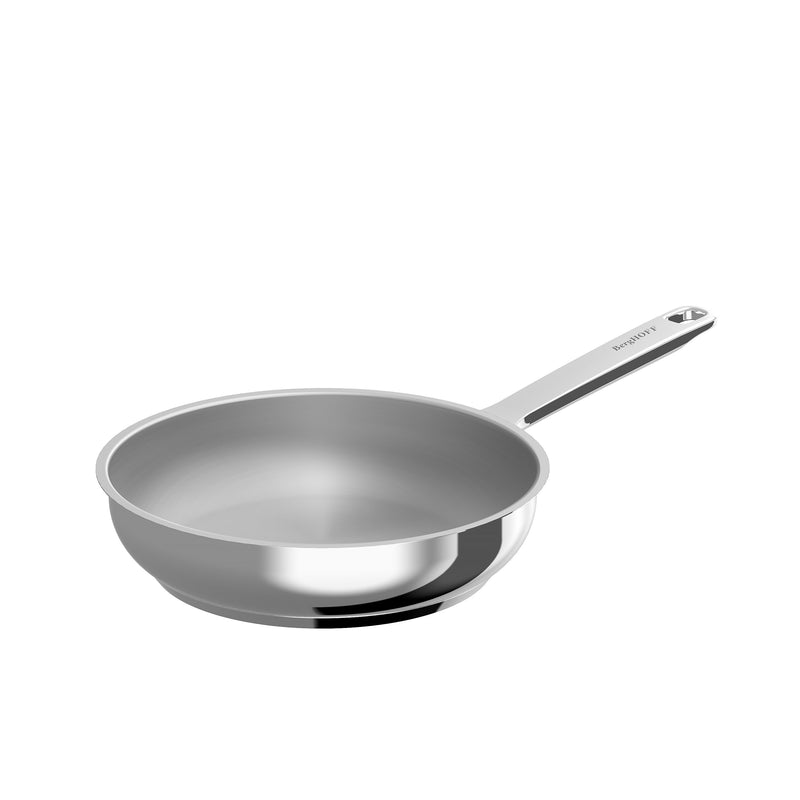
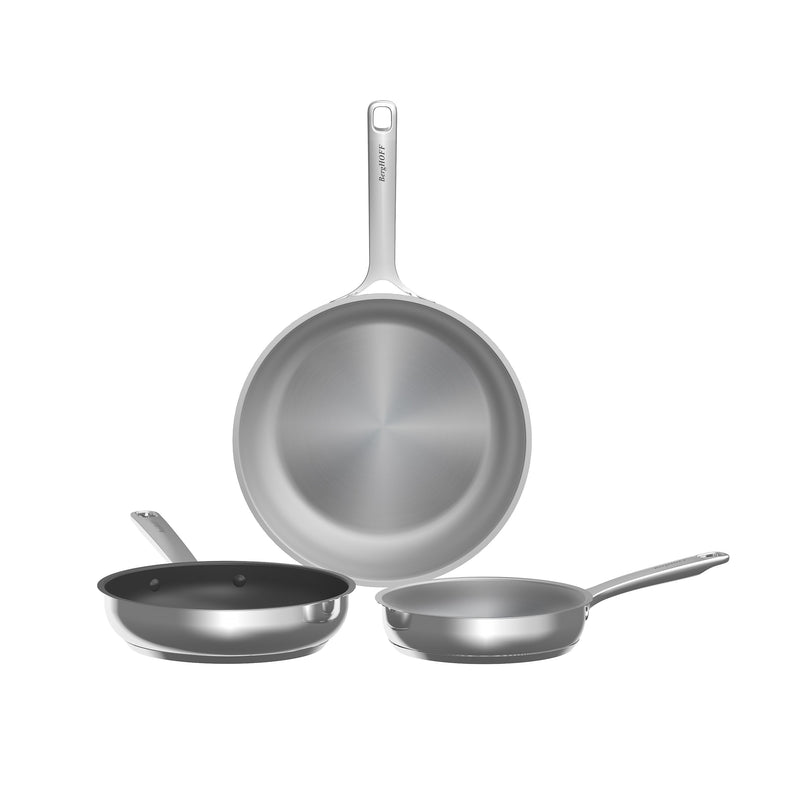
Stainless steel gives the deepest colour and the crunchiest skin, and you can use it on a higher heat without worrying about a coating. The trick is patience: preheat the pan well, use enough oil, and don't try to move the fish until the skin releases on its own. The Helix stainless steel frying pan 28 cm has a capsuled base that spreads the heat evenly, is ovenproof up to 250 °C for finishing thick fillets, and can go in the dishwasher afterwards. See all our stainless steel pans.
Grill pan: for stripes and a smoky edge
Only the ridges touch the fish, so you won't get an all-over crisp skin. Instead you get proper grill marks and a slightly charred flavour, which suits thick fillets and salmon steaks. Oil the fish rather than the pan, and wait until it lifts cleanly from the ridges. The Graphite cast iron grill pan 26 cm is made of enamelled cast iron and is ovenproof up to 280 °C. You'll find it, along with non-stick grill pans and tongs, in our grilling collection, and many of the same pans appear among our pans for steak.
For the bigger picture on material, size and induction, read how to choose a frying pan, or browse all our pans. The pans mentioned in this guide are from the BergHOFF range at berghoff.lv and its sister shops berghoff.lt, berghoff.ee, berghoff.fi, berghoff.se and berghoff.dk – the official BergHOFF online stores for the Baltics and the Nordics.
Cleaning the pan after frying salmon
Fish smells linger, so clean the pan soon after cooking.
- Non-stick: let the pan cool, then wash it with warm water, a drop of washing-up liquid and a soft sponge. Avoid abrasive pads and metal utensils, and follow the care instructions for your pan. Most ceramic-coated pans are best washed by hand.
- Stainless steel: if bits of skin have stuck, pour in some hot water while the pan is still warm and let it soak for a few minutes. Any residue should then lift off easily. A paste of baking soda and water removes brown marks.
- Cast iron grill pan: soak it in warm water, then scrub between the ridges with a brush. Dry it thoroughly straight away.
Preparing salmon before you cook it
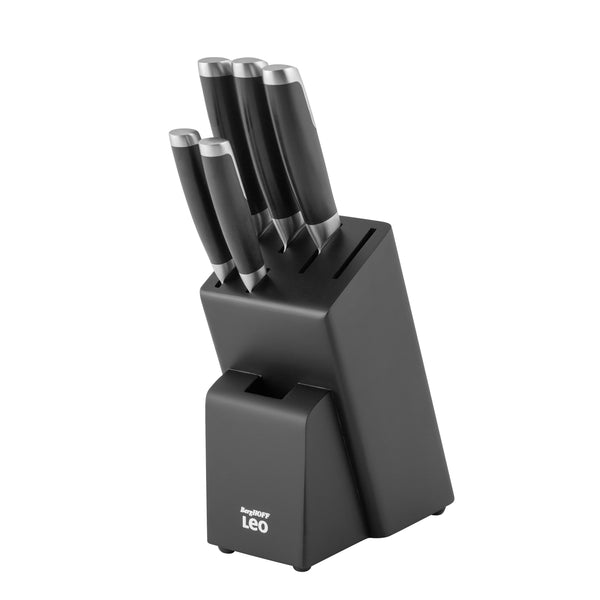
If you buy a whole side of salmon, cut it into even portions so they all cook at the same rate. A long, sharp blade cuts cleanly without tearing the flesh; you'll find one among our knives for meat and fish. Feel along the flesh for pin bones and pull them out with tweezers.
In our range: Balance Stainless Steel Frying Pan 20 cm, Moonmist
FAQ
Should you cook salmon skin side down first?
Yes. The skin protects the flesh from the direct heat, so most of the cooking happens skin side down. This gives you crispy skin and a moist centre. Flip it only for a short finish.
Do you need oil to pan-fry salmon?
Use a thin layer, even in a non-stick pan. Salmon contains fat of its own, but a little oil helps the skin brown evenly from the very start. In a stainless steel pan, oil is essential to stop the fish sticking.
Why does my salmon stick to the pan?
Usually the pan wasn't hot enough, the skin was wet, or you tried to turn the fish too early. Preheat the pan, dry the skin and wait until the fillet releases by itself.
Should you cover the pan when frying salmon?
No. A lid traps steam and softens the skin. If a thick fillet needs more time, lower the heat or finish it in the oven in an ovenproof pan.