
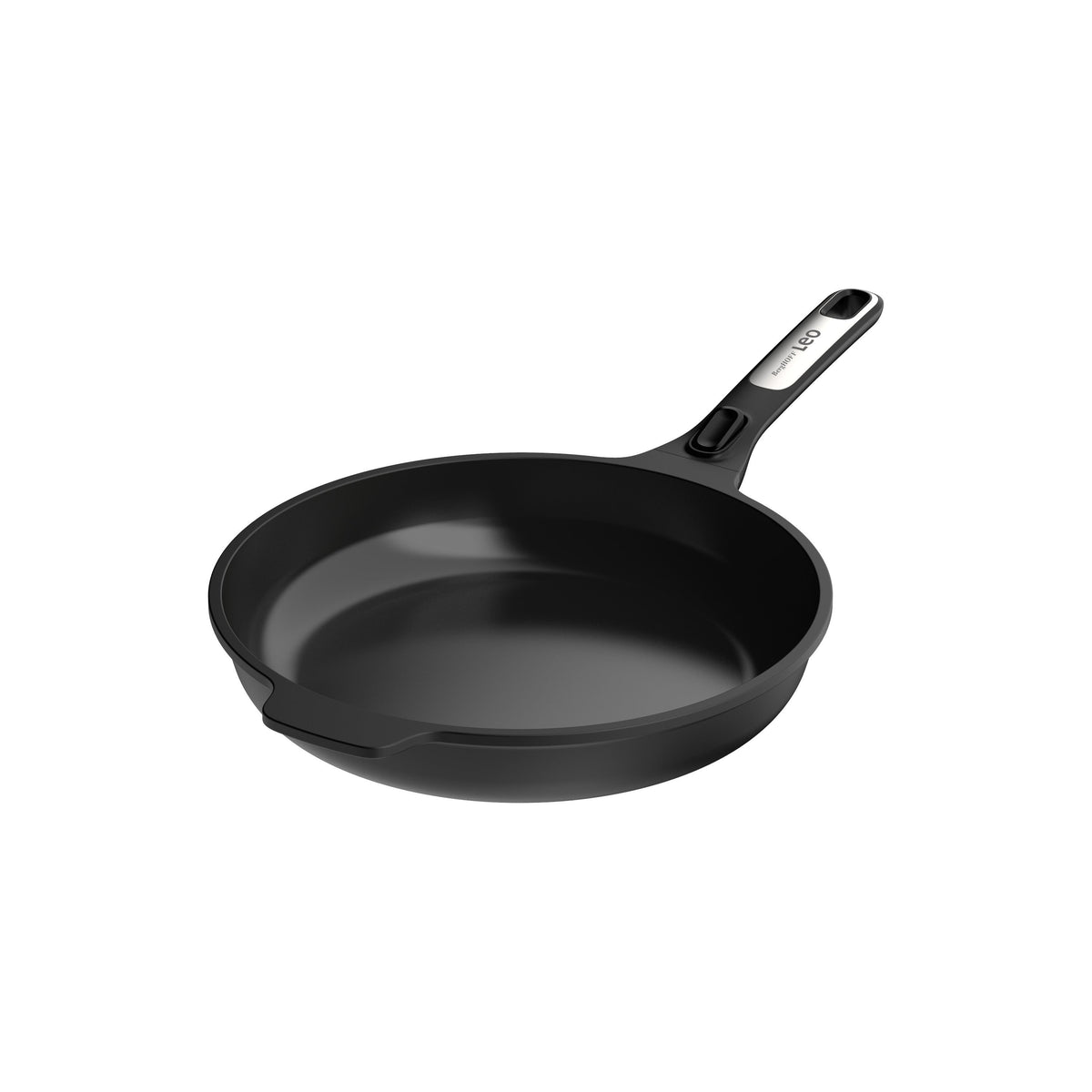
Short answer: the best frying pan is the one that suits what you cook most often. Eggs, fish and pancakes are easiest in a non-stick pan. Steaks and anything that needs a proper sear are best in stainless steel or cast iron. For most households the most useful pair is a 28 cm non-stick pan for everyday cooking and a stainless steel pan for high heat.
Below we compare materials and sizes, explain what matters on an induction hob and how to look after each type – so you can compare pans in any shop.
Which frying pan for which food?
| You mostly cook … | Choose | Why |
|---|---|---|
| eggs, omelettes, fish, vegetables | non-stick frying pan | Food releases easily, little fat needed. |
| steak, chops, chicken with a crust | stainless steel frying pan | Handles high heat and metal utensils. |
| meat and vegetables with grill marks | grill pan | Raised ridges sear and let fat drain. |
| stir-fries and noodles | wok | High sides make tossing easy. |
| pancakes and crêpes | pancake pan | A low rim makes flipping easy. |
Frying pan materials compared
| Material | Strengths | Watch out for | Washing |
|---|---|---|---|
| Ceramic non-stick | Easy release, light, heats quickly | Not on maximum heat when empty, no metal utensils | By hand |
| Stainless steel | High heat, no coating to wear out | Needs preheating so food doesn't stick | Dishwasher |
| Cast iron | Excellent heat retention, even crust | Heavy, slow to heat | By hand |
| Carbon steel ("iron" pan) | High heat, lighter than cast iron | Needs seasoning, rusts if left wet | By hand |
Non-stick (ceramic) frying pans
BergHOFF non-stick pans use the ceramic CeraGreen coating, which the manufacturer states is PFAS-free. Food releases easily and you need very little fat. Most models are oven-safe to 180 °C, and the Phantom frying pan 28 cm goes up to 230 °C once its detachable handle is removed. A coating lasts longest if you never heat the empty pan on full power, use wooden, silicone or nylon utensils and wash it by hand.
Stainless steel frying pans
Stainless steel has no coating to wear off. It is the pan for searing, browning and making a pan sauce, and it can go in the dishwasher. The Helix stainless steel frying pan 28 cm is oven-safe to 250 °C. The trick is preheating: heat the empty pan over medium heat until a drop of water forms a bead that glides across the surface, then add fat and food – and don't turn the meat too early. Read more in stainless steel vs non-stick frying pan.
Cast iron and carbon steel
Cast iron holds heat for a long time, so even a thick steak gets an even crust. It is heavy and slow to heat, but unbeatable when you need serious heat. The enamelled Graphite cast-iron grill pan 26 cm is oven-safe to 280 °C and does not need seasoning. Carbon steel – often sold as an "iron frying pan" – is lighter and develops a natural non-stick patina, but it must be dried and oiled after every wash.
What size frying pan do you need?
A 28 cm pan is the most versatile size for two to four people; 24 cm suits one or two, 20 cm a couple of eggs, and 30–32 cm a large family. A pan that is too small steams food instead of frying it. See our detailed guide to frying pan sizes, or browse 28 cm frying pans. If you need several sizes, a frying pan set usually costs less than buying the same pans separately.
Frying pans for induction hobs
An induction hob only heats a magnetic base, so check for the induction symbol – or try a fridge magnet: if it sticks to the base, the pan will work. All frying pans BergHOFF sells are suitable for all hob types, including induction. Look for a flat base that matches the cooking zone, and don't use the boost setting on an empty pan. More in our induction cookware guide.
Checklist before you buy
- What do I cook most often? Choose the material.
- How many people do I cook for? Choose the size.
- Does it work on my hob? Check the induction symbol.
- Oven limit: check both the pan and the lid.
- Weight and handle: heavy holds heat, light is easier to handle.
- Washing: if you want the dishwasher, choose stainless steel.
Frequently asked questions
What is the most versatile frying pan?
A 28 cm non-stick pan. If you cook a lot of meat, add a stainless steel pan.
Is stainless steel or non-stick better?
Non-stick is easier for delicate food and low-fat cooking. Stainless steel handles higher heat and the dishwasher but needs preheating.
Can frying pans go in the oven?
It depends on the model: BergHOFF non-stick pans are usually oven-safe to 180 °C, some to 230 °C, and Helix stainless steel pans to 250 °C. Always check the lid and handle too.
How long does a non-stick coating last?
It depends on use. Overheating the empty pan, metal utensils and frequent dishwasher cycles wear it fastest.