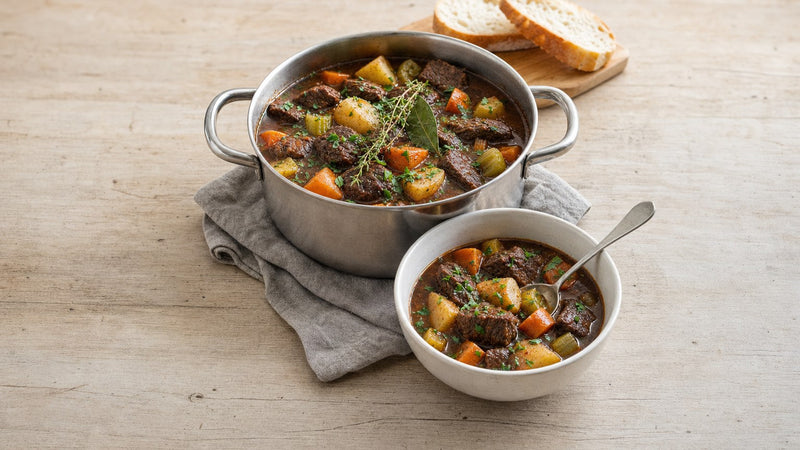
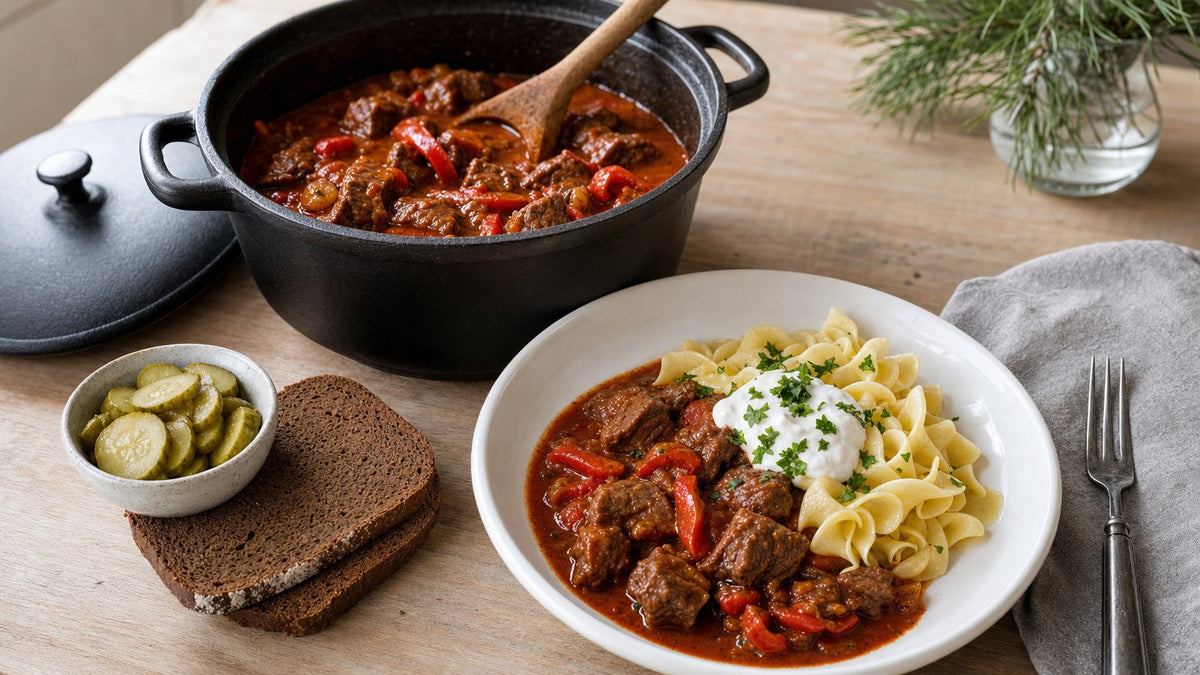
Beef goulash is a thick, deep red stew of slowly braised beef, plenty of onions and sweet paprika, with red pepper, tomato and a little caraway. It follows the Hungarian pörkölt style, with very little liquid, so the onions melt into a rich sauce. This beef goulash recipe serves 4 and takes about 3 hours 20 minutes, but only 20 minutes of that is chopping. The rest happens in one covered casserole, either on the hob or in the oven. It works because the beef is browned first, the paprika is stirred in off the heat so it never turns bitter, and the stew is cooked low and slow until the meat falls apart.
| Preparation | 20 minutes |
|---|---|
| Cooking | about 3 hours (mostly hands-off) |
| Total | about 3 hours 20 minutes |
| Servings | 4 |
| Difficulty | Easy |
| What you need | A 20 cm casserole with a lid (about 3 litres), a chopping board, a sharp knife, a wooden spoon |
Ingredients
For the goulash
- 800 g beef chuck or shin, cut into 3 cm cubes
- 2 tbsp sunflower oil or lard
- 3 medium onions (about 350 g), finely chopped
- 2 garlic cloves, finely chopped
- 1 tsp caraway seeds, lightly crushed
- 2 tbsp sweet paprika
- ½ tsp hot paprika or a pinch of cayenne pepper (optional)
- 1 tbsp tomato purée
- 1 red pepper (about 150 g), cut into strips
- 1 ripe tomato (about 120 g), chopped
- 400 ml beef stock or water
- 1 bay leaf
- ½ tsp dried marjoram
- 1½ tsp salt, plus more to taste
- ½ tsp freshly ground black pepper
To serve
- 4 tbsp soured cream (optional)
- 1 small bunch of flat-leaf parsley, chopped
How to make beef goulash
- Prepare the beef. Pat the beef cubes dry with kitchen paper, trim off any large pieces of hard fat and season with 1 tsp of the salt and the black pepper. Dry meat browns; wet meat only steams.
- Brown the beef. Heat 1 tbsp of the oil in a 20 cm casserole (about 3 litres) over a medium-high heat. Brown the beef in two or three batches for 4–5 minutes each, turning the cubes only once they release easily from the base. Lift each batch onto a plate and keep the juices.
- Soften the onions. Turn the heat down to medium, add the rest of the oil and the onions with the remaining ½ tsp of salt. Cook for 10–12 minutes, stirring often and scraping up the brown bits from the base, until the onions are soft and golden. Stir in the garlic and caraway and cook for 1 more minute.
- Add the paprika off the heat. Take the casserole off the heat and wait about 30 seconds. Stir in both kinds of paprika and the tomato purée until the onions turn deep red, then pour in about 100 ml of the stock straight away. Paprika burns within seconds in hot fat and turns bitter, so never add it over a direct flame.
- Braise slowly. Put the casserole back on the heat and add the beef with its juices, the pepper strips, the tomato, bay leaf, marjoram and the rest of the stock. The liquid should come about two-thirds of the way up the meat, not cover it. Bring to a gentle simmer and put the lid on. Either leave it on the lowest heat for 2–2½ hours, stirring every 30 minutes, or move it to an oven preheated to 160 °C (140 °C fan) for about 2½ hours. If the stew looks dry, add a splash of hot water.
- Thicken and season. When the beef breaks apart easily with a spoon, take the lid off and simmer for another 10–15 minutes until the sauce is thick and glossy. Remove the bay leaf, then taste and add more salt or hot paprika if needed. Leave the goulash to rest off the heat for 10 minutes.
- Serve. Spoon the goulash onto warm plates with egg noodles, boiled potatoes or bread. Top each portion with a spoonful of soured cream, if you like, and plenty of chopped parsley.
What to cook beef goulash in
Goulash needs a pot that browns well and then holds a low, steady heat for more than two hours without the thick sauce catching. Look for a heavy base, a well-fitting lid and the right size: this recipe makes a little over 2 litres, so a 20 cm casserole of about 3 litres is ideal. In a much bigger pot the shallow liquid evaporates too fast. To braise in the oven, both pot and lid must be ovenproof. You will find suitable pots in our cookware for stews range.
Cast iron for the classic slow braise
Enamelled cast iron holds heat so well that the stew keeps simmering gently even on the lowest setting. The Graphite cast iron covered casserole 20 cm holds 3 litres and has a matt enamel finish inside and out. The lid has self-basting bumps on the inside, so the steam drips back onto the meat and keeps it juicy. It is ovenproof up to 280 °C, works on all hobs including induction, and comes with two silicone sleeves that protect the enamel when you store it. Hand washing is recommended.
Stainless steel with a glass lid
If you would rather keep an eye on the stew without lifting the lid, the Graphite stainless steel covered casserole 20 cm is a lighter option. It holds 3.4 litres, has capacity marks inside and a capsuled base that spreads the heat evenly, so the onions colour without burning in the middle. It works on all hobs including induction and can go in the dishwasher. The pot is ovenproof up to 250 °C, the glass lid up to 180 °C, which is plenty for braising at 160 °C. Compare other sizes and materials among our casseroles, or read our guide saucepan vs casserole vs stockpot to see which pot suits which job.
Complete your kitchen: if you also need a saucepan for the noodles or potatoes and a larger pot for soups, have a look at our pot and pan sets.
Tips and common mistakes
- The goulash tastes bitter. The paprika has burnt. Always take the pot off the heat before you add it, and pour in some liquid within 30 seconds.
- The meat is tough. Either the cut was too lean or the stew has not cooked for long enough. Chuck and shin need at least 2 hours; if a cube does not break apart with a spoon, give it another 20–30 minutes.
- The meat is grey, not brown. Too much beef went into the pot at once, so it steamed in its own juices. Brown it in two or three batches and do not stir it too early.
Variations
Goulash soup
For a soup, cut the beef into 2 cm cubes, add 2 diced potatoes and 1 diced carrot after the first hour and top up with about 1 litre of stock (you will need a 4-litre pot). Simmer for another 40 minutes until the potatoes are soft.
Smoky goulash
Fry 100 g of diced smoked bacon before browning the beef and use the fat instead of the oil. Replace a third of the sweet paprika with smoked paprika.
Pork goulash
Use 800 g of pork shoulder instead of beef. It becomes tender faster, so check it after 1½ hours.
What to serve with beef goulash
In Hungary, pörkölt is served with nokedli, small soft egg dumplings. Wide egg noodles or spätzle are the closest thing you can buy. Boiled potatoes or rye bread work just as well, with pickled cucumbers on the side. If you like slow-cooked one-pot dinners, try our chili con carne, or for a quicker but just as warming dish, an easy butter chicken.
Beef goulash FAQ
Is goulash a soup or a stew?
Both, depending on where you are. In Hungary, gulyás is a soup with beef, potatoes and paprika, while the thick stew most of Europe calls goulash is closer to pörkölt. This recipe is the stew; the soup version is under Variations.
What is the best beef for goulash?
A cut with plenty of connective tissue, such as chuck, shin or blade. It needs long cooking but turns tender and makes the sauce silky. Lean cuts such as sirloin or topside stay dry and stringy.
Can I make goulash in the oven?
Yes, and it is the easiest way. Once everything is in the pot and simmering, cover it and braise it at 160 °C (140 °C fan) for about 2½ hours. You only need to stir it once or twice.
Can goulash be made ahead or frozen?
Goulash tastes even better the next day. Cool it quickly, keep it covered in the fridge for up to 3 days and reheat it gently with a splash of water. It also freezes well for up to 3 months.
This image is illustrative and was created with AI.